If you've researched remote work in Sri Lanka, you've probably landed on Weligama or Ahangama — the two towns that anchor the country's south coast digital nomad scene. Midigama sits quietly between them, a fishing-and-surf village that most guides mention only in passing. That's changing, and if you're weighing up where to spend a month or three working remotely, it's worth understanding why.
Why Midigama, specifically
Midigama is a small village on Sri Lanka's southern coast, about five minutes from Weligama and ten from Ahangama by scooter or tuk-tuk. It has its own well-known surf breaks — Lazy Left and Lazy Right chief among them — a handful of guesthouses and cafes, and a slower pace than either neighbour.
For remote workers, that combination matters more than it might seem. Weligama has grown fast around its beginner-friendly bay and now carries real tourist traffic — busy roads, louder nightlife, higher prices. Ahangama has become the coworking and cafe hub of the coast, with a strong nomad community but limited quiet accommodation. Midigama gives you a genuine village to live in, while both of those towns — and everything in them — stay a short ride away.
Midigama vs Ahangama vs Weligama
None of these towns are wrong choices — they're fifteen minutes apart and most nomads end up visiting all three regularly. Here's the rough shape of each, for planning purposes.
Midigama
- Quiet, local, village pace
- Uncrowded reef surf on the doorstep
- Fewer cafes and shops directly in-village
- 5–10 min to Weligama and Ahangama
Ahangama
- Strongest cafe & coworking scene
- Established nomad and surf community
- Busier roads, higher accommodation prices
- Good mid-level and advanced waves
Weligama
- Best beginner surf bay on the coast
- Most infrastructure — banks, shops, clinics
- Busiest and most touristy of the three
- Widest range of accommodation options
A simple way to think about it: work and errands in Ahangama or Weligama, live and surf in Midigama.
Where to work
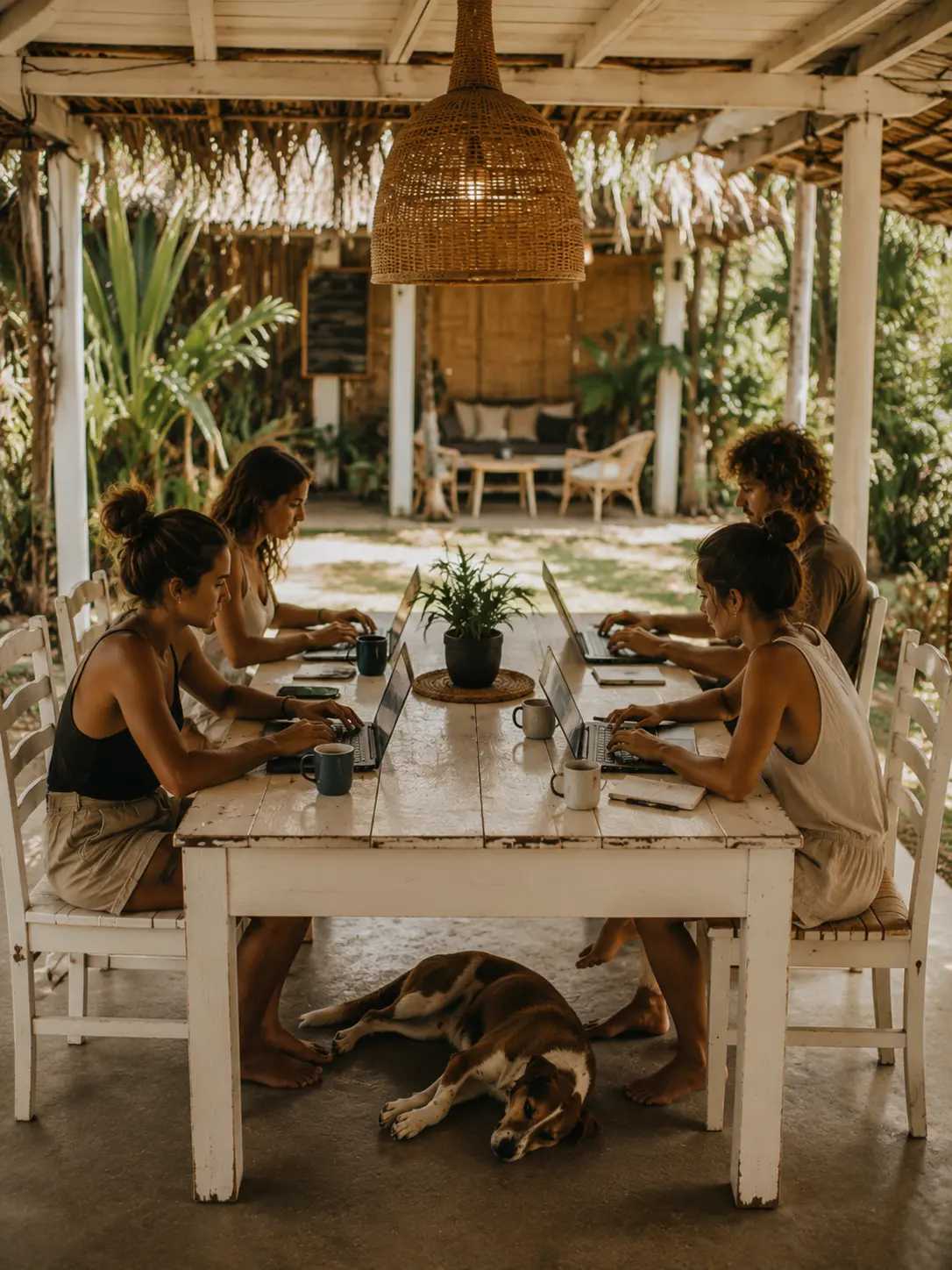
Coworking on the south coast has grown quickly, though it's still concentrated in Ahangama and Weligama rather than Midigama itself. That's the gap WaveCeylon is opening to fill — a coliving house in Midigama with a dedicated coworking area, so you don't have to choose between living somewhere quiet and having a proper desk.
For video calls and focused work, look for: fibre or dedicated internet rather than shared guesthouse wifi, backup power for the occasional outage, a desk and chair rather than a beanbag, and enough quiet hours to actually get through a task list. Cafe wifi across the coast is improving but still inconsistent enough that most long-stay nomads default to a coworking space or coliving desk for anything client-facing.
Getting to Midigama
Bandaranaike International Airport (Colombo) is the main gateway, roughly 2.5–3 hours from Midigama by car via the southern expressway. Exit at Galle or Matara and head toward the Midigama Clock Tower; most accommodation, including WaveCeylon, is within a few minutes of it.
A private taxi or pre-booked airport transfer is the simplest option on arrival — trains and buses run along the coast but take considerably longer and aren't practical with luggage on day one. Once you're settled, a rented scooter is the standard way to get around; tuk-tuks are widely available for shorter hops or if you'd rather not ride.
Cost of living for a remote worker
Sri Lanka's south coast remains inexpensive by global nomad-hub standards. As a rough monthly range for one person:
- Accommodation (coliving/private room): $400–800
- Food (mix of cooking and eating out): $150–300
- Local transport (scooter rental, tuk-tuks): $40–80
- Coworking / desk access: $50–150 (often included with coliving)
- SIM/data: $10–20
All in, most nomads land somewhere between $700 and $1,400 a month depending on lifestyle — well below equivalent setups in Bali, Lisbon, or Mexico's coastal hotspots, with the tradeoff of a longer flight from Europe or North America.
Visas and entry requirements
Most nationalities enter Sri Lanka on an Electronic Travel Authorization (ETA), with extensions available from within the country for longer stays. Sri Lanka has been developing dedicated digital nomad visa options as the remote-work tourism sector grows — worth checking directly with Sri Lankan immigration or your embassy for the current rules before you book, since requirements change.
Life outside the laptop
The reason people stay in Midigama longer than planned usually isn't the wifi. It's dawn surf sessions at Lazy Left or Lazy Right before the workday starts, fresh seafood and hoppers from village cafes, sunset at the reef breaks along Plantations, and a community of surfers, remote workers, and creators who tend to overlap more here than in busier towns. See our full surf guide to Midigama for a spot-by-spot breakdown of the breaks nearby.
A sample week
- MorningsDawn surf session, then coffee and breakfast before logging on.
- MiddayDeep work from a coworking desk — calls, deliverables, the actual job.
- AfternoonsA scooter ride to Ahangama or Weligama for errands, a change of scenery, or a different cafe.
- EveningsSecond surf session, communal dinner, and time with the people you're staying with.
- WeekendsDay trips to Mirissa, Galle Fort, or Hiriketiya — all within an hour or two.
Where to stay
Midigama's accommodation options have historically leaned toward surf guesthouses rather than spaces built for remote work. WaveCeylon is opening in November 2026 to change that: five private rooms, a shared kitchen and living room, and a coworking area, all built specifically for surfers, remote workers, healers, and creators who want a real base rather than a hotel room.
If you're planning a longer stay in Midigama, our FAQ page covers the practical questions we get most often — wifi, pricing, getting here, and more. And if you're still weighing coliving against other ways to stay long-term in Sri Lanka, see our full guide to coliving in Sri Lanka, including how spaces across Weligama, Ahangama, Midigama, and Hiriketiya compare.